Diary Rabbit Review
As a designer with years of experience in typeface selection, I’ve come across countless fonts that promise to elevate a project—but few deliver on their potential. Diary Rabbit, part of the Script Amp collection, is one that deserves serious consideration for real-world design work. Its blend of elegance and personality makes it a strong contender for a variety of applications, though it’s not without its limitations.
The First Impression
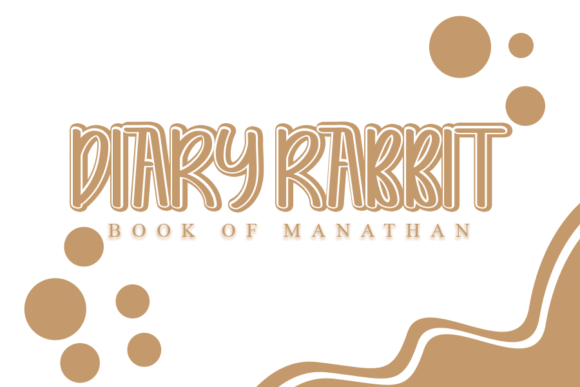
Diary Rabbit immediately conveys a sense of warmth and intimacy. The flowing, connected letters give it a handwritten feel, but with enough structure to maintain professionalism. It’s not overly ornate, which is a relief—it avoids the trap of looking too whimsical or childish. Instead, it feels like a personal note from a friend, making it ideal for projects that aim to connect emotionally with the audience.
The font’s visual personality is soft yet confident. It carries a quiet sophistication that works well in both modern and traditional contexts. It doesn’t scream for attention, but it doesn’t fade into the background either. This balance makes it versatile, though not universally applicable.
Real-World Performance
In logo design, Diary Rabbit can be a powerful tool. Its fluidity lends itself well to names or taglines that require a personal touch. However, it’s important to keep the text short—longer phrases can become messy and lose clarity. When used as a brand mark, it pairs best with a clean, neutral background to avoid visual clutter.
For brand identity, Diary Rabbit adds a unique character that stands out from the standard sans serif or serif fonts. It’s particularly effective when paired with a more structured typeface, creating a contrast that enhances readability without sacrificing style. In packaging design, it can add a handcrafted feel, especially for artisanal or boutique brands.
When it comes to product labels, posters, and flyers, Diary Rabbit shines in small doses. It’s perfect for headlines or subheadings that need a bit of flair. But as with any display font, it should be used sparingly. Overuse can lead to a chaotic look, especially when combined with other decorative elements.
In editorial design, Diary Rabbit can be a refreshing change from the usual fonts. It works well for article titles, pull quotes, or section headers. However, it’s not the best choice for body text due to its low x-height and intricate details, which can reduce legibility at smaller sizes.
On social media graphics, Diary Rabbit adds a personal, authentic vibe. It’s great for captions, banners, or promotional content that aims to feel more human. But again, it’s best to pair it with a more readable font for longer text blocks.
For merchandise, website headers, and blog graphics, Diary Rabbit offers a stylish option that can elevate the overall aesthetic. It’s particularly useful in digital products, Canva templates, and Cricut projects where a custom, handcrafted look is desired.
Where to Use With Caution
While Diary Rabbit has many strengths, there are certain scenarios where it may not be the best choice. Large headlines, for instance, can suffer from a lack of clarity if the font is not properly spaced. Short phrases, while ideal, can still feel overwhelming if not balanced with negative space.
For premium packaging or high-end branding, Diary Rabbit might not convey the level of sophistication expected. In such cases, a more refined script or serif font could be a better fit. Similarly, in social posts or supporting text, its decorative nature may detract from the message rather than enhance it.
When used as a decorative accent, Diary Rabbit can add a nice touch, but it should never overshadow the main content. It’s also important to test it in black and white to ensure it maintains its visual appeal without color.
Readability and Design Impact
Readability is a key concern with any font, and Diary Rabbit is no exception. At smaller sizes, its fine strokes and connected letters can make it difficult to read, especially in long paragraphs. For this reason, it’s best suited for headings, titles, or short phrases rather than body text.
Despite this, Diary Rabbit can contribute to a strong brand identity. Its unique character helps create a memorable visual signature, which is essential for building recognition and trust. When used consistently across different mediums, it can reinforce a brand’s personality and values.
In terms of engagement, Diary Rabbit can draw attention and evoke emotion. Its warm, inviting tone can make a design feel more approachable and relatable. However, this effect depends heavily on how it’s implemented and paired with other design elements.
Visual mood is another area where Diary Rabbit excels. It can add a sense of creativity, nostalgia, or authenticity to a project, depending on the context. This makes it a valuable asset in creative or lifestyle-related designs.
Practical Designer Notes
Before finalizing any design with Diary Rabbit, it’s crucial to test it in black and white. This helps assess how it performs without color and ensures it remains legible and impactful. Small-size testing is equally important, especially if the font will be used in print or on mobile screens.
Trying it on real mockups gives a better sense of how it looks in context. Comparing uppercase and lowercase variants can reveal differences in weight and spacing that might affect the overall design. Reviewing spacing and kerning is also essential to avoid awkward gaps or overlaps.
Pairing Diary Rabbit with other font styles—such as a serif, sans serif, or display font—can help find the right balance. Handwritten fonts may complement it well, but care must be taken to avoid visual confusion. Always confirm commercial licensing before using it in client or business projects to ensure legal compliance.
Overall, Diary Rabbit is a premium font that can add a distinct personality to a wide range of design projects. Its versatility, combined with its emotional appeal, makes it a valuable addition to any designer’s toolkit. Whether you're working on a logo, a website header, or a printable design, Diary Rabbit is worth considering for its unique character and expressive potential.